Pruning That Corrects Growth and Prevents Decline
Tree pruning services in Covington for homeowners addressing dead wood, weak branch structure, and disease prevention
Crossing limbs create bark wounds where branches rub during wind movement, weak crotches fail under load when branch unions lack sufficient attachment strength, and dead wood harbors insects and decay organisms that spread to healthy tissue. Pruning removes these structural liabilities while correcting growth patterns that compromise long-term tree health and stability. Buster's Tree Removal performs selective branch removal guided by tree health assessment that examines root exposure, canopy density, visible signs of nutrient deficiency, and age-related decline across Covington, Mandeville, Folsom, and I-12 corridor properties where tropical-adjacent climate and heat stress create specific pruning considerations.
The assessment identifies indicators such as canopy thinning, premature leaf drop, fungal growth on bark, or dieback from branch tips inward, determining whether selective pruning combined with fertilization can restore vigor or whether decline has progressed beyond corrective intervention. Storm-season damage assessment informs preventive pruning strategy by revealing which branch structures failed under wind load and which defects require correction before the next weather event.
Arrange a health assessment and pruning consultation to address current structural concerns and prevent future failures.
What Proper Pruning Requires
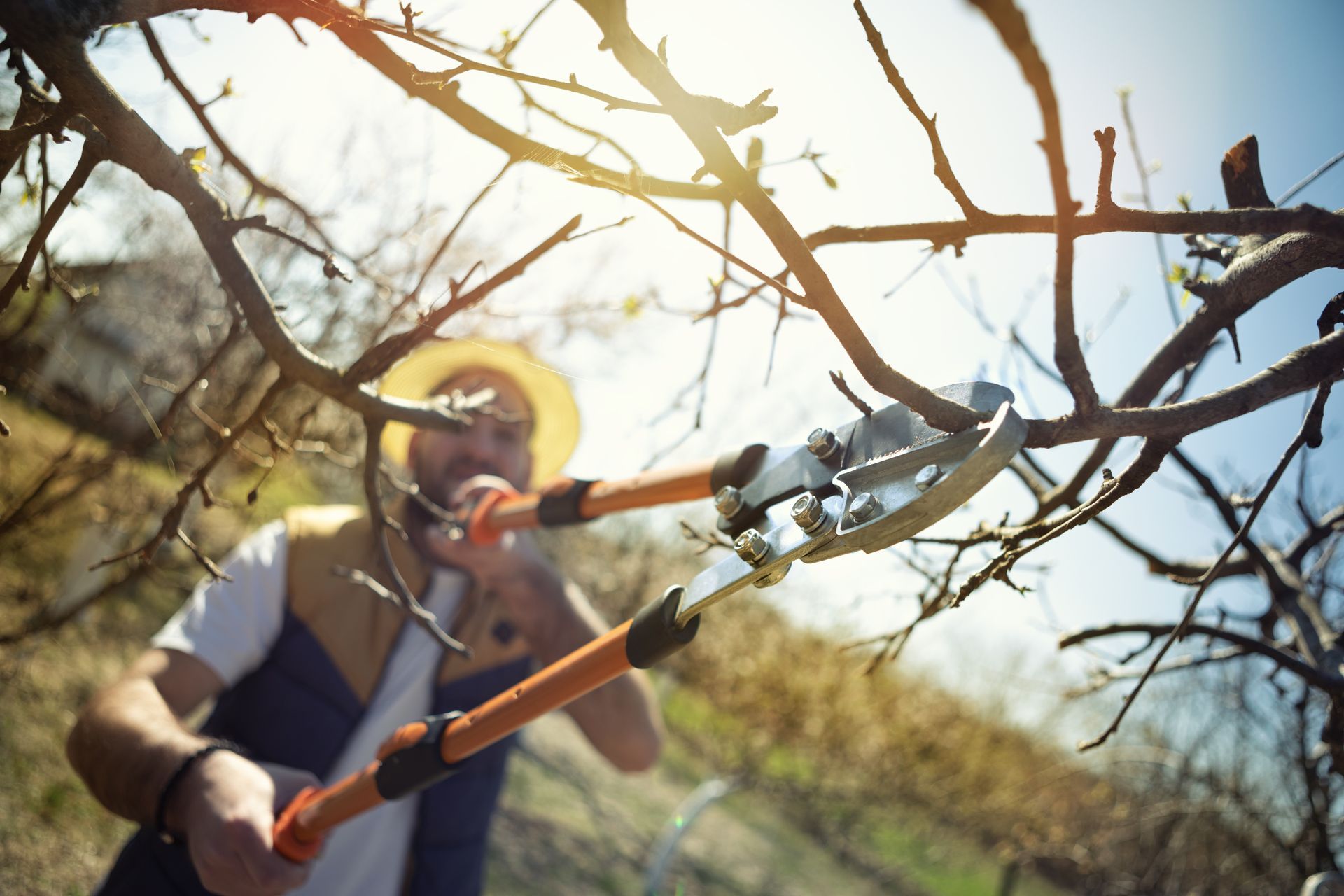
Selective branch removal targets dead or diseased wood first, eliminating tissue that cannot recover and serves only as pathogen habitat. Crossing limbs are addressed by removing the weaker or more poorly positioned branch, preserving the limb with better attachment angle and structural contribution. Weak crotches with narrow branch unions are corrected by removing one of the competing leaders, forcing growth energy into the remaining stem and reducing split risk under ice or wind load.
After pruning, trees no longer drop excessive dead branches during storms, canopy appearance improves as thinning and dieback are reduced, and branch structure supports rather than conflicts with future growth. Wounds close more quickly without competing decay organisms, light reaches interior canopy to support foliage density, and mechanical damage from rubbing branches ceases. When soil or nutrient deficiency contributes to poor growth patterns, fertilization is combined with pruning to address both structural correction and underlying health limitations common to sandy or compacted soils across the North Shore.
Pruning differs from trimming in that it targets specific health and structural defects rather than general canopy reduction or clearance. The work is documented through owner assessment process that records visible decline indicators, branch removal decisions, and follow-up recommendations when additional intervention may be required as trees age or face environmental stress.
Answers to Frequent Service Questions
Property owners managing tree health across residential landscapes in Covington, Mandeville, and Folsom ask about timing, technique, and integration with broader tree care before committing to pruning work.
How is tree health assessed before pruning begins?
Assessment examines root exposure indicating soil erosion or heaving, canopy density and color suggesting nutrient status, dead wood percentage revealing systemic decline, and trunk integrity showing disease or mechanical damage that affects pruning strategy and expected recovery.
What role does fertilization play in tree pruning?
When soil deficiency or nutrient stress contributes to canopy thinning, slow growth, or poor wound closure, fertilization is applied during pruning visits to address underlying causes of decline rather than treating only visible symptoms through branch removal.
How does tropical weather affect pruning decisions?
Storm-season damage patterns reveal which branch structures are vulnerable to wind failure, guiding preventive removal of weak crotches, overextended limbs, and poorly attached leaders before the next tropical weather system impacts the Lake Pontchartrain corridor.
What happens to branches after they are removed?
Cut branches are chipped on-site or hauled for disposal depending on volume and property access, with debris cleared completely to restore lawn appearance and eliminate trip hazards or mowing obstructions left by pruning work.
Can pruning address trees that are already in decline?
Pruning can slow decline by removing dead tissue and improving structural efficiency, but trees with advanced root disease, extensive trunk decay, or systemic pathogen infection may require removal rather than correction when health assessment indicates recovery is no longer feasible.
Buster's Tree Removal integrates pruning with comprehensive health assessments, responding to client-identified concerns while addressing underlying structural and health issues that affect long-term tree performance. Call (985) 788-5925 to schedule an assessment and determine whether pruning, fertilization, or alternative intervention best addresses your trees' current condition.