
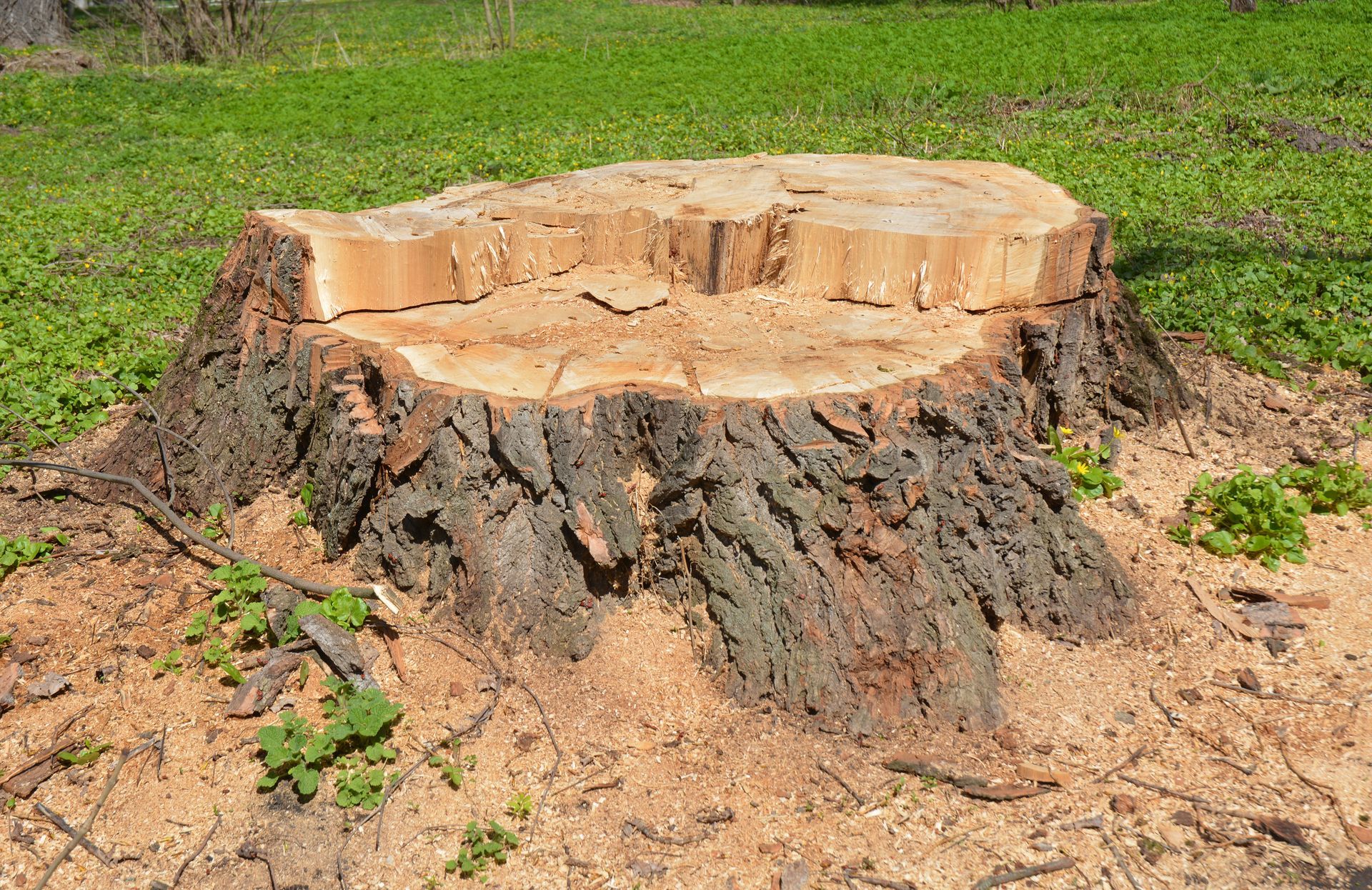
Reclaim Usable Yard Space After Removal
Stump Removal in Covington for Properties Left with Stumps After Tree Work
Stumps remain after tree removal, creating tripping hazards and limiting what you can build, plant, or mow across your property. Buster's Tree Removal grinds and extracts stumps across Covington, preparing sites for landscaping, construction, or simply returning flat, usable yard space. In wet, clay-heavy soil common to the North Shore, grinding depth and equipment selection depend on moisture levels at the time of work—winter weather can delay access or facilitate faster grinding when ground conditions stabilize.
Stump grinding uses rotating carbide teeth to reduce the stump to wood chips below grade level, while complete extraction removes the entire root ball when site plans require deeper excavation or foundation work. Both methods eliminate the visible stump and prevent regrowth, but extraction leaves a larger void that requires backfill. Clay-heavy soil in Covington means root systems often spread wider than expected, affecting grinding time and debris volume.
Schedule a property evaluation to determine grinding depth and equipment requirements for your specific site conditions.
What Complete Stump Removal Includes
Stump removal begins with site assessment to identify underground utilities, irrigation lines, and root spread, which determines equipment positioning and grinding approach. Grinding proceeds in passes, reducing the stump progressively until the surface is below grade and roots are severed to prevent sprouting. Wood chips generated during grinding are either spread as mulch or hauled away, depending on your site plans and landscaping needs.
After grinding, the site is level and ready for sod, seed, gravel, or construction—no raised stump remains to interfere with mowing equipment or foot traffic. Root decay occurs underground over months, but surface hazards are eliminated immediately. For projects requiring excavation or foundation work, complete stump extraction removes the root ball entirely, leaving a clean cavity ready for backfill or structural preparation.
Stump removal is often bundled with tree removal to handle the entire job in one visit, reducing mobilization costs and site disruption. Residential lot reclamation drives most demand, especially when homeowners prepare yards for fencing, pools, or landscaping projects that require flat, obstruction-free surfaces.
Questions About Stump Work in Covington
Stump removal addresses concerns about yard safety, usability, and future landscaping plans, and the process varies based on stump size, soil conditions, and what you plan to do with the cleared space.
What happens to the wood chips after grinding?
Wood chips are spread as mulch on-site or removed entirely depending on your preference and whether you need the area cleared for construction, sod installation, or gravel placement.
How deep does grinding go below the surface?
Grinding typically extends six to twelve inches below grade, which eliminates the visible stump and prevents regrowth while leaving enough depth for sod, seed, or landscaping to take root without interference.
When is complete extraction necessary instead of grinding?
Extraction is required when foundation work, pool installation, or deep excavation is planned, because grinding leaves roots underground that decay slowly and can interfere with structural projects.
Why does wet clay soil in Covington affect grinding time?
Clay holds moisture and becomes dense when saturated, which slows grinding equipment and requires more passes to achieve the same depth compared to drier, sandier soil conditions.
How soon after tree removal can the stump be ground?
Grinding can occur immediately after tree removal if equipment is on-site, or scheduled separately once the tree work is complete and the site is accessible without damaging surrounding landscaping.
Buster's Tree Removal handles stump grinding and extraction across Covington and surrounding North Shore properties, with equipment sized for residential lots and tight access areas. Request a site-specific estimate to review grinding depth, debris handling, and scheduling based on current ground conditions.